Theology of History
![]() |
![]() |
![]() |
![]() |
![]() |
![]() |
![]() |
Egalitarianism - V
An Egalitarian Impulse in Every Field of Life
Note: Prof. Plinio gave this series of classes in 1957; today in 2025 we see how the egalitarianism in each of the fields he points out has increased and come to dominate almost completely. TIA
To command & to obey
It is necessary to see how today’s egalitarian men think. They do not believe that there should be persons who command and persons who obey. They know that there have to be such groups, but they do not accept the whole classical doctrine proving there must be people who command.
The situation is different: For them, to command is no more honorable than to obey. It is an entirely equal function in the hierarchy of values. Commanding and obeying end up being exactly the same thing. A complete leveling.
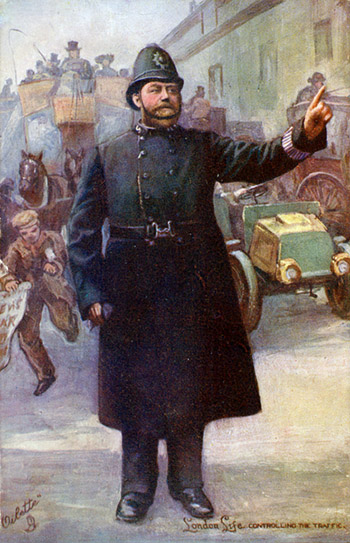
Yet even today when someone exercises authority, however small it may be, we understand that it confers a certain superiority upon them, even for example the authority of a civil guard.
Admiral Lafond
In France I met an Admiral, but he did not use this title. His name was Admiral Lafond. He had the title of Admiral because he was one of the most senior engineer in the shipbuilding and port affairs of the French navy.
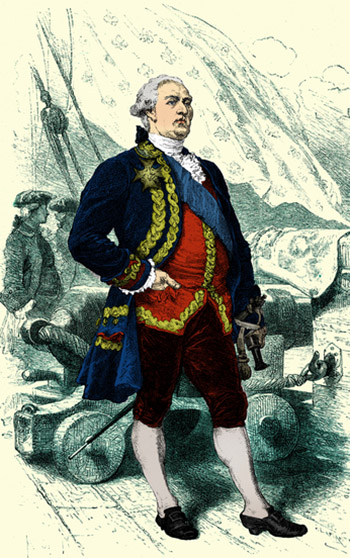
I asked him one day if he was an Admiral or not. He told me that in the French navy he held the rank of Admiral, but I should understand that, as important as his service was, it did not involve the risk of life.
Therefore, it was not natural for him to use that military title. This is a high concept. He told me that this was the French custom to not use the title for such positions in recognition of the fact that the fullness of military glory belongs exclusively to those who risk their lives.
The matter is coherent, serious, upright, implying a hierarchy of values. The risk of life is central to military life, and we cannot transform the army or navy into a department of equal things.
So, for example, let us say that this person is a superintendent, that person renders another service, and yet another offers his life in battle, as if to die is just another mere function: You cannot view things in this way. It's a deforming and egalitarian leveling of things.
In Brazil, as in all countries of the world, the quartermaster generals will rise to the rank of general. And with what euphoria! And the system goes along. The senior military officer who does not expose his life is officially considered on the same level as one who takes this risk. One can see that things are taken too far here. It is a loss of the notion of the natural elevation of things.
Note that I am intentionally placing myself outside the problem of social class, which will be addressed later. What I want to show is that in the common order of values a general egalitarian leveling is taking place.
Other differences that are disappearing
Another thing along in this line is the tendency to underestimate the difference between the priest and the layman. This trend comes from the bottom up, and also from the top down. There is also the curious tendency of the military not to wears uniform. Except for the chaplain, none of the military personnel wear a uniform. We are seeing the disappearance of everything that can represent a distinction, the characteristic that marks the difference showing that someone is not like the others.
Spies supersede ambassadors
Let us consider the embassies. At the top of the embassy is the Ambassador, who is the man of the salon, able to move with ease among others, at the same time serious and authentic. He is the man who has residence in the embassy, etc. Then we have the embassy staff, and among them are the spies in the embassy’s espionage department. Let us now see how the public considers the espionage department as the right hand of the embassy.

Let us suppose we see in a bookstore window these two titles, side by side: “Memoires of an Ambassador at the Court of Saint-James” and “Memoires of a Spy in the Underworld of English Politics.” Naturally, the spy story will be more sought after. The ambassador is considered as a kind of wedding cake topper. We have the cake, then on top a little castle, above that the newlyweds, and above them, the dove. The ambassador is the dove.
He is by no means the right-hand man of the embassy. The strong arm is the spy and the commercial attaché, and to some degree the military attaché when he is involved in some espionage or directing a spy operation.
Differences between illustrious cities declining
Another thing is the differences that existed between more or less illustrious cities. In the past there were cities that were illustrious and considered beautiful for some fact in its history or past. For example, Itu (in the state of São Paulo) was the “Most Faithful City,” a title granted in 1822 by Emperor Dom Pedro I. This did not prevent the first Convention of the Republic from being held there, but it was considered the “Levitical City” because it had provided the largest number of priests.

Franca had the title of “the Emperor’s Village,” named such in honor of Emperor Pedro I of Brazil. Today it is recognized only as the “National Capital of Footwear” and “National Basketball Capital.” Piracicaba was “The Bride of the Hill,” Guaratinguetá the “Eastern Princess,” Recife was the “Brazilian Venice.” The words expressed a certain aspect of the place on a spiritual plane and sought, in the sphere of spiritual values, to differentiate one from another. But this has passed.
For example, today, what raises the most interest in Sorocaba? Who in Sorocaba cares about its historical part? There are two Sorocabas: An old Sorocaba composed of old and decaying people who still pay some small attention to the history of Sorocaba; alongside this, there is the industrial Sorocaba, the only one given importance. Sorocaba is no longer the city that resisted the Duke of Caxias, but rather Sorocaba became famous for rendering pork lard or because the owner of a large Brazilian company was born there. Photographs of the first rendering can and first pig are proudly displayed and presented.
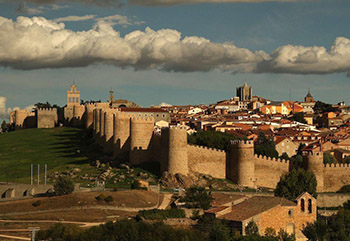
Another example would be the city of Ávila de St. Teresa of Jesus. In Ávila there is the story of how the Moors besieged the city and were valiantly resisted by the women, who were alone there. For this reason, women had a special representation in the city Senate, the upper chamber of that municipality, as well as its own title and day, “Ávila of the Ladies of the Queen,” or something like that.
When I was a little boy, I heard how something similar had happened in Goiana, a city from which my family originate in the State of Pernambuco. The men were absent when the Dutch arrived to attack the city. The women of Goiana resisted valiantly, and this was a source of pride for Goiana. Today Goiana is an old poor and small city because it does not generate money. Nothing else matters.
And so I insist, everything that is not reducible to matter, which is the lowest element of Creation, has lost its value. Everything is turned toward complete equality: Things have lost their value.
The leveling trend violates the natural order
Another point that can be discussed here along this line is the lack of emphasis on the differences among families. In the past, there was much talk about such differentiations. Today, families have few distinguishing characteristics. Everything must be equalized, leveled.
I would be pleased to learn of other, better examples than those I am giving here. But what matters is to show the situation of a total leveling in the most diverse fields. What would be more natural is for the trend to manifest itself in some fields, but not in others. But this uniform egalitarianism in all fields indicates a violence against the natural order and points to a source that is cause, which is precisely the fact we want to emphasize here.
To be continued
To command & to obey
Even a traffic policemen in the past had an air of command
The situation is different: For them, to command is no more honorable than to obey. It is an entirely equal function in the hierarchy of values. Commanding and obeying end up being exactly the same thing. A complete leveling.
Yet even today when someone exercises authority, however small it may be, we understand that it confers a certain superiority upon them, even for example the authority of a civil guard.
Admiral Lafond
In France I met an Admiral, but he did not use this title. His name was Admiral Lafond. He had the title of Admiral because he was one of the most senior engineer in the shipbuilding and port affairs of the French navy.
To have the title Admiral meant commanding in battle
Therefore, it was not natural for him to use that military title. This is a high concept. He told me that this was the French custom to not use the title for such positions in recognition of the fact that the fullness of military glory belongs exclusively to those who risk their lives.
The matter is coherent, serious, upright, implying a hierarchy of values. The risk of life is central to military life, and we cannot transform the army or navy into a department of equal things.
So, for example, let us say that this person is a superintendent, that person renders another service, and yet another offers his life in battle, as if to die is just another mere function: You cannot view things in this way. It's a deforming and egalitarian leveling of things.
In Brazil, as in all countries of the world, the quartermaster generals will rise to the rank of general. And with what euphoria! And the system goes along. The senior military officer who does not expose his life is officially considered on the same level as one who takes this risk. One can see that things are taken too far here. It is a loss of the notion of the natural elevation of things.
Note that I am intentionally placing myself outside the problem of social class, which will be addressed later. What I want to show is that in the common order of values a general egalitarian leveling is taking place.
Other differences that are disappearing
Another thing along in this line is the tendency to underestimate the difference between the priest and the layman. This trend comes from the bottom up, and also from the top down. There is also the curious tendency of the military not to wears uniform. Except for the chaplain, none of the military personnel wear a uniform. We are seeing the disappearance of everything that can represent a distinction, the characteristic that marks the difference showing that someone is not like the others.
Spies supersede ambassadors
Let us consider the embassies. At the top of the embassy is the Ambassador, who is the man of the salon, able to move with ease among others, at the same time serious and authentic. He is the man who has residence in the embassy, etc. Then we have the embassy staff, and among them are the spies in the embassy’s espionage department. Let us now see how the public considers the espionage department as the right hand of the embassy.
The ‘International Spy Museum’ in Washington DC reflects the public's mania for espionage
He is by no means the right-hand man of the embassy. The strong arm is the spy and the commercial attaché, and to some degree the military attaché when he is involved in some espionage or directing a spy operation.
Differences between illustrious cities declining
Another thing is the differences that existed between more or less illustrious cities. In the past there were cities that were illustrious and considered beautiful for some fact in its history or past. For example, Itu (in the state of São Paulo) was the “Most Faithful City,” a title granted in 1822 by Emperor Dom Pedro I. This did not prevent the first Convention of the Republic from being held there, but it was considered the “Levitical City” because it had provided the largest number of priests.
The old Itu in Brazil had the honor to be known as the ‘Most faithful City’
For example, today, what raises the most interest in Sorocaba? Who in Sorocaba cares about its historical part? There are two Sorocabas: An old Sorocaba composed of old and decaying people who still pay some small attention to the history of Sorocaba; alongside this, there is the industrial Sorocaba, the only one given importance. Sorocaba is no longer the city that resisted the Duke of Caxias, but rather Sorocaba became famous for rendering pork lard or because the owner of a large Brazilian company was born there. Photographs of the first rendering can and first pig are proudly displayed and presented.
The city of Ávila where glorious past deeds took place
When I was a little boy, I heard how something similar had happened in Goiana, a city from which my family originate in the State of Pernambuco. The men were absent when the Dutch arrived to attack the city. The women of Goiana resisted valiantly, and this was a source of pride for Goiana. Today Goiana is an old poor and small city because it does not generate money. Nothing else matters.
And so I insist, everything that is not reducible to matter, which is the lowest element of Creation, has lost its value. Everything is turned toward complete equality: Things have lost their value.
The leveling trend violates the natural order
Another point that can be discussed here along this line is the lack of emphasis on the differences among families. In the past, there was much talk about such differentiations. Today, families have few distinguishing characteristics. Everything must be equalized, leveled.
I would be pleased to learn of other, better examples than those I am giving here. But what matters is to show the situation of a total leveling in the most diverse fields. What would be more natural is for the trend to manifest itself in some fields, but not in others. But this uniform egalitarianism in all fields indicates a violence against the natural order and points to a source that is cause, which is precisely the fact we want to emphasize here.
To be continued
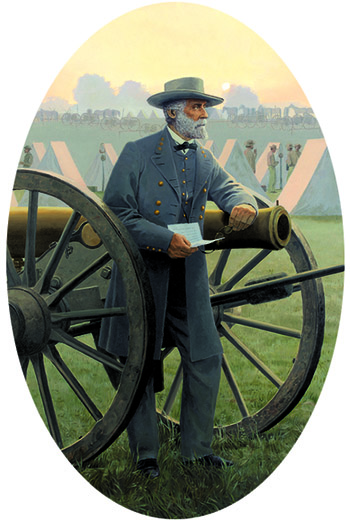
General Lee in the expressive painting,
‘The Loneliness of Command’
Posted November 19, 2025

______________________
______________________