Catholic Customs
 |
 |
 |
 |
 |
 |
 |
Carols Bring to Life the Nativity Story
To bring to life the wondrous happenings of Bethlehem, carolers frequently dressed as characters from the Nativity and in many places enacted plays with unique regional additions.
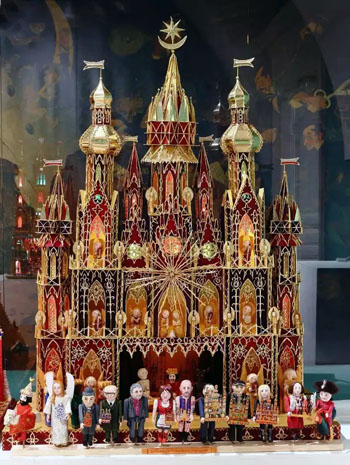 The favorite play in Poland performed by young men featured King Herod who sat on his throne and spoke with an angel, a devil, a Jew, a marshal, a Turk, and finally a Wise man who brought the news of the birth of the Savior. (1) Hungarian young men embellished the nativity story by adding humorous characters to their plays, one favorite being the deaf shepherd who misunderstood everything. (2)
In the 1700s, a Frenchman named Brioche invented a portable Nativity scene that had puppet figures that could be moved to enact the Nativity story. Throughout Europe groups and individuals from all levels of society began creating their own portable crèches to carry with them as they caroled. For the show, one person hid and stood behind the scene to move the characters while others stood on either side singing and playing instruments to accompany the story. (3)
When missionaries went to Asia, Africa and the New World, they brought their Nativity plays, which were adapted to the customs of each area. For example, Filipino women in some areas dressed in colorful costumes and danced a pantomime of the Nativity story, while in Japan the children wore their most elaborate kimonos during their Nativity plays.
In Vancouver Canada decorated carol ships sailed down the waterways. In Alaska carol groups carried lanterns and a star; if two groups met, one attempted to destroy the other’s star as a symbol of Herod seeking to find the Christ Child. (4)
Dramatic plays of Latin America
When Franciscan missionaries evangelized the Aztecs of Mexico, the pueblos of New Mexico, and the tribes of California and Texas, they introduced dramatic Nativity plays (inspired by Medieval Mystery Plays) reenacting the shepherd’s journey to Bethlehem known as Las Pastorelas (or Los Pastores) in which the native peoples were invited to play prominent roles.
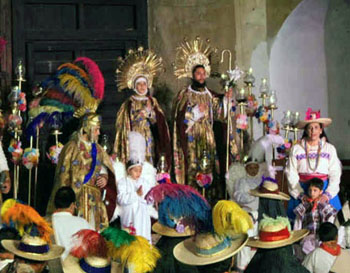
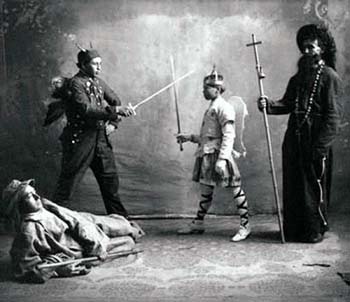 The native peoples even added their own dances. The play always included a scene of St. Michael doing battle with the Devil, defeating him and driving him away from the cave of Bethlehem.
Years after the arrival of the first missionaries the tradition continued; however, in order to prevent abuses, the priests decided to remove the performance from the churches and send it into the streets. Plays soon could be seen in open fields, public squares, church courtyards and home patios.
Often, the troop of male actors visited designated houses of the town or city on different days throughout the Christmas Season to perform their play. They were always amply rewarded with applause and plentiful food and drink. Each region and town developed their own unique lines and variations to the Nativity Play which were passed down orally from father to son. (5)
South American carols and plays were always lively with colorful costumes and vibrant dances. While many continue to this day, most of these modern versions have been corrupted with immodest dress and vulgarity.
In Brazil, these celebrations with dramatic performances were as vibrant as the Carnival festivities. One Brazilian nativity play introduced by the Portuguese was the pastoril, in which brightly costumed shepherdesses sang and danced as they told the story of the Nativity.
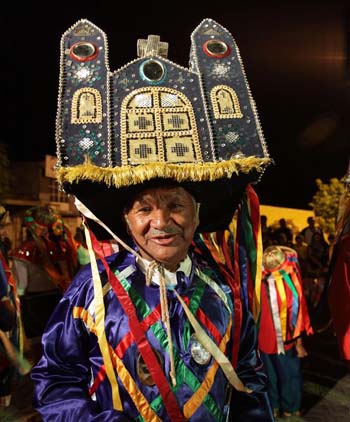 In many cities and villages of Brazil, Reisados, groups of men and boys dressed in colorful costumes and masks, went from house to house playing musical instruments, singing and performing the Dance of the Three Wise Men. At midnight on Christmas Eve, they processed to the Nativity Scene at the front of the church where they knelt reverently and sang a carol that ended with a farewell chant.
After the Mass, the Reisados made its rounds to every house of the village to awaken any sleepers and give Christmas greetings. They ended on their knees before the Nativity Scene erected in the town square. (6)
Men of Cuba and Puerto Rico also processed through the streets playing lively instruments and singing carols to awaken household dwellers in the early hours of Christmas morning. In honor of the journey of Our Lady and St. Joseph, the men entered every open house.
These processions, known as las parrandoas, were believed to have been introduced by a priest in the 19th century in the Cuban town of Remedios as a means to encourage the people to attend the early morning Golden Masses (December 16-December 24) and the Midnight Mass. Toward this end the priest sent children into the streets to make raucous noise with plowshares, cans and other instruments. (7)
Star caroling
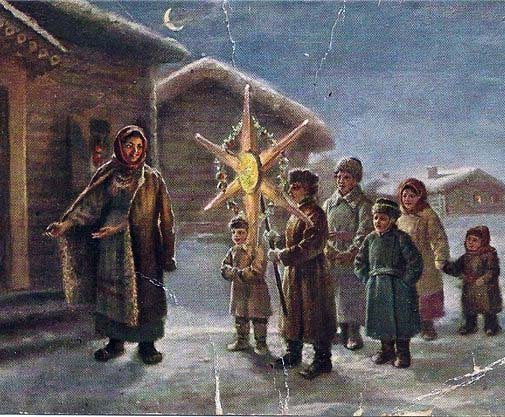 Just as in Bethlehem centuries before, the Star of Bethlehem shed its bright rays through many villages in Northern, Central and Eastern Europe as groups of boys dressed as the Three Kings in long robes and paper crowns carried their homemade stars on long poles illuminated by the flame of a candle. (8)
Indeed, star caroling appeared in various forms in many lands from Italy to Iceland, and then traveled with missionaries and immigrants into the New World.
Norwegian and Swedish boys carried figures of Our Lady and the Holy Babe along with their star lanterns and were sometimes accompanied by a goat figure representing the Devil. The wooden star in Romania was adorned with bells, frill and a Nativity Scene. (9)
Russian “star-bearers” bowed low to their hosts after singing “The master in his house is like Adam in Paradise, the mistress in the house is like a pancake in honey, the little children are like the red-green grapes.” (10)
Mumming & masked characters
In addition to caroling, groups of masked mummers in brilliant costumes traveled from house to house performing traditional folk plays filled with themes of death and rebirth that symbolized the resurrection of a new year brought by the birth of Our Lord.
The plot of the play often included a battle between two heroes, one of whom would die and then be restored to life by a doctor. St. George was often the hero in England, while St. Patrick was popular in Ireland. A few comical characters such as a quack doctor often entered the episodes, but the men who played the heroes strove to portray their character nobly and well. (11)
In Scandinavia, masked carolers wearing military uniforms decked with tinsel and carrying wooden swords went from house to house to perform their mock battles.
 One popular and ancient costume – most likely originating in the pagan peoples of Europe – as the animal mask. Purified of its pagan elements, these characters made a jovial and fitting addition to the Christmas plays for were not the first “adorers” at the Crib animals?
In rural Russia, men processed through the streets dressed as cows, pigs and goats to represent the animals from the Nativity. (12)
In Hungary, young men dressed in animal hides with masks. (13) Carolers in Wales and England, especially in Kent and the Midlands, were often accompanied by a man draped in a dark cloth who carried a ribbon bedecked wooden horse head known as the Hooden Horse. (14)
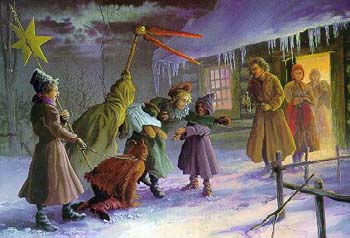
The Poles’ favorite animal to portray was the ox, played by a young man wearing a fuzzy woolen cloak with a wooden ox head that had a string attached so that the jaws could be moved. Other characters accompanied the ox as he went from house to house to put on a humorous show in which he pranced about and terrorized the children. (15)
This custom, while not per se religious in its origins, nonetheless contributed well to reliving the Nativity story since the ox played a prominent role in the Cave of Bethlehem. Ven. Mary of Agreda relates that on that Holy Night the ox came running to the Crib from neighboring fields at the moment of Christ’s birth so that he could adore the God-man and fulfill the prophecy, “The ox knoweth his owner, and the ass his master’s crib; but Israel hath not known me, and my people hath not understood.” (Is 1:3). (16)
Would that the Christmas streets and country sides were once again filled with carolers dressed in marvelous costumes, bearing greenery and crèches, and brightening the world with candle light and the glorious flickering of the Star of Bethlehem during the Twelve Days of Christmas! Surely, with the assistance of Our Lady and the Holy Angels, we can reclaim Christmastide for its rightful King by bringing the message of His Birth into the world with joyous carols and festivities.

A Polish portable Nativity Scene
with its puppet figurines
In the 1700s, a Frenchman named Brioche invented a portable Nativity scene that had puppet figures that could be moved to enact the Nativity story. Throughout Europe groups and individuals from all levels of society began creating their own portable crèches to carry with them as they caroled. For the show, one person hid and stood behind the scene to move the characters while others stood on either side singing and playing instruments to accompany the story. (3)
When missionaries went to Asia, Africa and the New World, they brought their Nativity plays, which were adapted to the customs of each area. For example, Filipino women in some areas dressed in colorful costumes and danced a pantomime of the Nativity story, while in Japan the children wore their most elaborate kimonos during their Nativity plays.
In Vancouver Canada decorated carol ships sailed down the waterways. In Alaska carol groups carried lanterns and a star; if two groups met, one attempted to destroy the other’s star as a symbol of Herod seeking to find the Christ Child. (4)
Dramatic plays of Latin America
When Franciscan missionaries evangelized the Aztecs of Mexico, the pueblos of New Mexico, and the tribes of California and Texas, they introduced dramatic Nativity plays (inspired by Medieval Mystery Plays) reenacting the shepherd’s journey to Bethlehem known as Las Pastorelas (or Los Pastores) in which the native peoples were invited to play prominent roles.
Above, a Mexican splendorous Holy Family; below, a young St. Michael defeats the Devil while a missionary stands & a shepherd sleeps
Years after the arrival of the first missionaries the tradition continued; however, in order to prevent abuses, the priests decided to remove the performance from the churches and send it into the streets. Plays soon could be seen in open fields, public squares, church courtyards and home patios.
Often, the troop of male actors visited designated houses of the town or city on different days throughout the Christmas Season to perform their play. They were always amply rewarded with applause and plentiful food and drink. Each region and town developed their own unique lines and variations to the Nativity Play which were passed down orally from father to son. (5)
South American carols and plays were always lively with colorful costumes and vibrant dances. While many continue to this day, most of these modern versions have been corrupted with immodest dress and vulgarity.
In Brazil, these celebrations with dramatic performances were as vibrant as the Carnival festivities. One Brazilian nativity play introduced by the Portuguese was the pastoril, in which brightly costumed shepherdesses sang and danced as they told the story of the Nativity.
A Brazilian in colorful costume participates
in the Reisados
After the Mass, the Reisados made its rounds to every house of the village to awaken any sleepers and give Christmas greetings. They ended on their knees before the Nativity Scene erected in the town square. (6)
Men of Cuba and Puerto Rico also processed through the streets playing lively instruments and singing carols to awaken household dwellers in the early hours of Christmas morning. In honor of the journey of Our Lady and St. Joseph, the men entered every open house.
These processions, known as las parrandoas, were believed to have been introduced by a priest in the 19th century in the Cuban town of Remedios as a means to encourage the people to attend the early morning Golden Masses (December 16-December 24) and the Midnight Mass. Toward this end the priest sent children into the streets to make raucous noise with plowshares, cans and other instruments. (7)
Star caroling
Children bear the Star of Bethlehem
through the streets
Indeed, star caroling appeared in various forms in many lands from Italy to Iceland, and then traveled with missionaries and immigrants into the New World.
Norwegian and Swedish boys carried figures of Our Lady and the Holy Babe along with their star lanterns and were sometimes accompanied by a goat figure representing the Devil. The wooden star in Romania was adorned with bells, frill and a Nativity Scene. (9)
Russian “star-bearers” bowed low to their hosts after singing “The master in his house is like Adam in Paradise, the mistress in the house is like a pancake in honey, the little children are like the red-green grapes.” (10)
Mumming & masked characters
In addition to caroling, groups of masked mummers in brilliant costumes traveled from house to house performing traditional folk plays filled with themes of death and rebirth that symbolized the resurrection of a new year brought by the birth of Our Lord.
The plot of the play often included a battle between two heroes, one of whom would die and then be restored to life by a doctor. St. George was often the hero in England, while St. Patrick was popular in Ireland. A few comical characters such as a quack doctor often entered the episodes, but the men who played the heroes strove to portray their character nobly and well. (11)
In Scandinavia, masked carolers wearing military uniforms decked with tinsel and carrying wooden swords went from house to house to perform their mock battles.
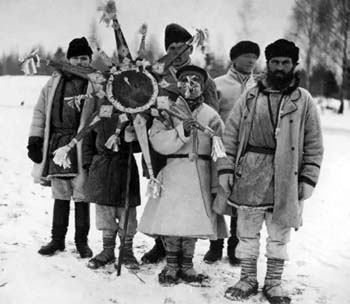
Above, Ukrainian men with their Star of Bethlehem;
below, the ‘ox’ in this group of carolers tries to frighten the children
In rural Russia, men processed through the streets dressed as cows, pigs and goats to represent the animals from the Nativity. (12)
In Hungary, young men dressed in animal hides with masks. (13) Carolers in Wales and England, especially in Kent and the Midlands, were often accompanied by a man draped in a dark cloth who carried a ribbon bedecked wooden horse head known as the Hooden Horse. (14)
The Poles’ favorite animal to portray was the ox, played by a young man wearing a fuzzy woolen cloak with a wooden ox head that had a string attached so that the jaws could be moved. Other characters accompanied the ox as he went from house to house to put on a humorous show in which he pranced about and terrorized the children. (15)
This custom, while not per se religious in its origins, nonetheless contributed well to reliving the Nativity story since the ox played a prominent role in the Cave of Bethlehem. Ven. Mary of Agreda relates that on that Holy Night the ox came running to the Crib from neighboring fields at the moment of Christ’s birth so that he could adore the God-man and fulfill the prophecy, “The ox knoweth his owner, and the ass his master’s crib; but Israel hath not known me, and my people hath not understood.” (Is 1:3). (16)
Would that the Christmas streets and country sides were once again filled with carolers dressed in marvelous costumes, bearing greenery and crèches, and brightening the world with candle light and the glorious flickering of the Star of Bethlehem during the Twelve Days of Christmas! Surely, with the assistance of Our Lady and the Holy Angels, we can reclaim Christmastide for its rightful King by bringing the message of His Birth into the world with joyous carols and festivities.
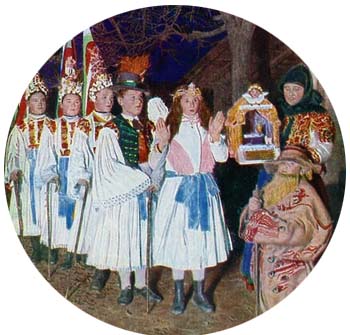
Hungarian caroling girls carry their
portable Nativity as they go from house to house
- Sophie Hodorowicz Knab, Polish Customs, Traditions, and Folklore (New York: Hippocrene Books, 1996), pp. 50-51.
- https://www.researchgate.net/publication/316500727_Hungarian_Folk_Customs_and_Traditions
- S.H. Knab, Polish Customs, Traditions, and Folklore, pp. 46-48.
- A Celebration of Christmas, ed. Gillian Cooke (New York: G. P. Putnam’s Sons, 1980), p. 42,
- Christmas in Mexico (Chicago, Illinois: World Book-Childcraft International, 1996), p.. 91. https://www.caminorealheritage.org/articles/1208_pastorela.pdf
- Christmas in Brazil (Chicago: World-Book-Childcraft International, 1991), pp. 59-61, 63.
- https://www.lajiribilla.cu/las-parrandas-de-remedios-contadas-en-imagenes/
- Mary P. Pringle and Clara A. Urann, Yule-tide in Many Lands (Boston: Lothrop Lee and Shepard Co., 1916), p. 83.
- A Celebration of Christmas, p. 91.
- https://nicholaskotar.com/2017/01/13/christmas-traditions-old-rus/
- Steve Roud, The English Year (Penguin Books: 2006), pp. 394-396.
- William S. Walsh, Curiosities of Popular Customs and of Rites, Ceremonies, Observances, and Miscellaneous Antiquities (Philadelphia: J. B. Lippincott Company, 1898), pp. 235-236.
- https://www.researchgate.net/publication/316500727_Hungarian_Folk_Customs_and_Traditions
- S. Roud, The English Year, pp. 368-369.
- S.H. Knab, Polish Customs, Traditions, and Folklore, p. 53.
- Mary of Jesus, Mystical City of God: The Incarnation, trans. Fiscar Marison (New Jersey: Ami Press, 1994), p. 406.


Posted January 19, 2026
______________________
______________________
 |
 |
 |
 |
 |
 |