International Affairs
 |
 |
 |
 |
 |
 |
 |
Trump Withdrawing US from NATO
- Trump declares NATO “beyond reconsideration,” delivering his strongest condemnation yet and signaling a potential willingness to abandon the U.S. commitment to the 77-year-old alliance, which he labeled a “paper tiger.”
- The critique centers on burden-sharing, with Trump accusing European allies of betraying the U.S. by refusing to assist in the military confrontation with Iran, specifically in policing the Strait of Hormuz.
- The remarks undermine NATO’s core deterrence, as questioning its credibility and suggesting Russia’s Putin shares his view alarms Eastern European members and weakens the security guarantee against aggression.
- A U.S. withdrawal would cause a global power realignment, emboldening adversaries like Russia and China, forcing Europe into a scramble for autonomous defense, and creating a security vacuum.
- The alliance is at a historic precipice, facing a fundamental choice between a renegotiated partnership or a catastrophic unraveling, challenging the multilateral security principle that has underpinned post-war peace.
At the heart of Trump’s broadside is a familiar grievance: the perceived failure of European allies to contribute their fair share to collective defense. His new comments tie this frustration directly to the current crisis, accusing Europe of abandoning the United States in its military confrontation with Iran. He specifically cited allies’ refusal to assist in policing the Strait of Hormuz. In Trump’s view, this inaction during a time of conflict validates his long-held skepticism of the alliance’s value and reliability.
“The Strait of Hormuz is a narrow, strategically vital maritime chokepoint located between the Persian Gulf and the Gulf of Oman,” said BrightU.AI‘s Enoch. “It serves as the world’s most important oil transit route, with a significant portion of global seaborne oil shipments passing through it. Due to its narrow width, it is highly susceptible to blockade or disruption, particularly by Iran, which controls its northern shoreline.”
'Paper tiger' & Putin’s perception
Trump’s characterization of NATO as a “paper tiger” strikes at the core of the alliance’s deterrence doctrine. By publicly questioning its credibility and suggesting Russian President Vladimir Putin shares his dim view, Trump undermines a central pillar of European security. This rhetoric alarms Eastern European members in particular, who rely on the unambiguous nature of the U.S. security guarantee as a bulwark against Russian aggression.
Founded in 1949 as a collective defense pact, NATO has long been considered a cornerstone of the international order. Trump’s presidency first introduced serious public doubt from the Oval Office, treating the alliance as a transactional arrangement. His latest comments move beyond transactional criticism to suggest existential rejection, marking a radical departure from seven decades of bipartisan U.S. foreign policy.
Barbs at Britain
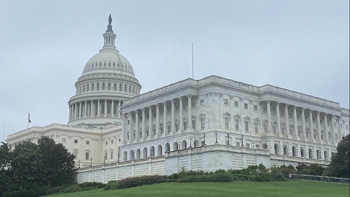
Trump cannot leave NATO without the Congress' approval, but he can make it vulnerable to Russia
Despite the rhetoric, a unilateral withdrawal would face significant obstacles. A 2023 law mandates that any president seeking to leave NATO must secure approval from a two-thirds majority in the Senate or an Act of Congress. This legislative safeguard reflects deep-seated institutional support for the alliance within the U.S. government.
The catalyst: The Strait of Hormuz
The immediate context is the conflict with Iran and its disruption of shipping through the Strait of Hormuz. Trump framed European reluctance to deploy naval forces as a fundamental failure of alliance solidarity. He argued that the U.S. automatically came to the aid of allies but received nothing in return during this crisis, reducing the strategic partnership to a single test of burden-sharing.
Trump’s comments tap into a long-simmering American sentiment that Europe has grown complacent, relying on U.S. military might while investing in social welfare at home. Trump’s demand that allies either buy U.S. oil or fight for their own energy supplies encapsulates this transactional worldview.
Global strategic repercussions
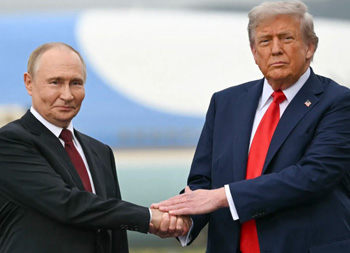
Trump to Putin in Alaska: ‘I will help you’
Beyond the political rupture, the practical military implications are severe. NATO’s integrated command structure, intelligence-sharing, and joint planning are deeply dependent on U.S. leadership. More immediately, the public doubt cast on Article 5’s credibility could tempt adversaries to test the alliance’s resolve.
Reassessment or rupture?
The coming weeks will reveal whether this is a brutal negotiating tactic or a genuine declaration of intent to disengage. European capitals now face a dilemma: accelerate military spending and strategic autonomy, or attempt to negotiate with a skeptical American leader. For the United States, a fundamental debate is ignited over whether its global leadership is sustained through enduring alliances or unilateral assertion of power.
Donald Trump’s declaration that NATO is “beyond reconsideration” is a potential pivot point in history. It challenges the principle of multilateral collective security that has underpinned relative peace in Europe for generations. Whether this leads to a renegotiated alliance or a catastrophic unraveling remains to be seen. The bedrock of transatlantic security has been struck with a force unprecedented in the post-war era, and its fractures will define the geopolitical landscape for years to come.
Read other articles by Ava Grace here
Posted April 6, 2026



______________________
______________________
 The Return of the Muslim Threat |
 War, Just War |
 In the Wake of the Crusades |
 The Universal Republic Blessed by the Conciliar Popes |
 Vade Mecum on the Errors of Nazism |
 Curious Affinities Between the Thinking of John Paul II and Marxism |