Stories & Legends
 |
 |
 |
 |
 |
 |
 |
The Miracles of St. Blaise
Blaise was born of noble birth in Cappadocia. His reputation for holiness was so well known that the Christian men of the city of Sebaste chose him to be a Bishop. However at that time Diocletian the Emperor was making such strong persecutions against the Catholics that St. Blaise sought out a place in the woods as a hermitage.
And there, the birds of heaven brought to him food to eat. And it seemed to him that they and other animals of the forest came to serve him and accompany him, and would not depart from him till he had lifted up his hands and blessed them. And also sick men came to him and anon were cured and healed.
St. Blaise is found by the lord’s knights
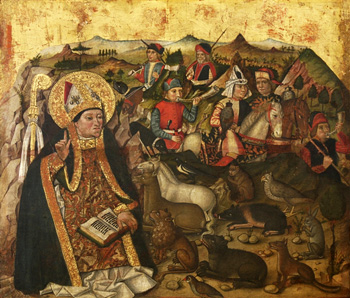 Now it happed that the Prince of this region sent his knights to hunt, and they could take nothing. But by chance they came unto the desert place where St. Blaise was. And there they found a great multitude of beasts which were about him, taking refuge there. And the hunters could take none of them.
Abashed they returned to their lord and told him what had happened. And the lord was amazed to hear this, and anon sent many knights for St. Blaise, and commanded them to bring him and all the Christian men with him.
And that night Jesus Christ appeared to the Saint three times, and said to him: "Arise up and make sacrifice to me. Lo! This day the knights will come to fetch thee at the command of the Prince."
And, indeed, the knights came and said to him: "Come out from this place, for our lord calls for thee."
And St. Blaise answered: "My sons, be welcome, I see now well that God has not forgotten me." So he went with them and began to preach and convert, and did many miracles.
The boy with a fish bone in his throat
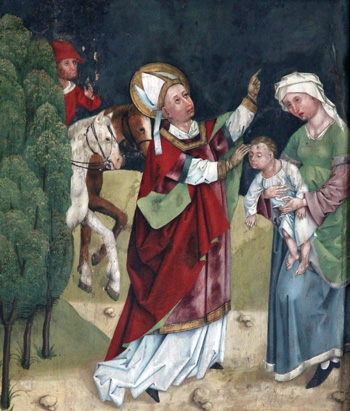 There was a woman whose young son was dying, for in his throat was a bone of a fish which was strangling him. She brought the half-dead child before the Bishop's feet, praying him that he would make her son whole.
And St. Blaise put his hand upon him and made his prayer to God that this child should be helped, and also all they who demanded benefits of health in his name. And anon the boy was whole and sound.
The widow's pig
Another widow woman there was who was poor but had a swine. One day she came to St. Blaise in great distress because a wolf had borne it away, and she humbly beseeched the Saint that she might have again her pig.
And he began to smile and said: “Good woman be not in distress, for you shall have your swine again.” And he called the wolf up to him, and commanded him to get the pig and drive him back to the widow’s house. Then the wolf went sheepishly away and did what the good Bishop had told him to do, and the widow rejoiced to have her pig restored to her.
But the pagan governor Agricola became disturbed to know St. Blaise would not make sacrifice to his pagan gods. And so he ordered his soldiers to capture the Saint and bring him before him. St. Blaise did not waver and boldly told him that his gods were fiends.
 The governor became enraged and threw him in prison. But when the widow whose pig was returned to her heard about this, she slew the pig and brought meat and candles to the Saint in his prison. And he thanked God and ate thereof, and he said to her that every year she should offer in his church a candle, for not only she but all who would do so would be blessed in life. And so she did so all her life, and she had great prosperity.
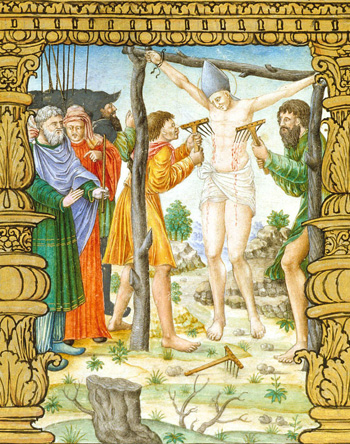
Even after imprisonment, St. Blaise refused to worship the governor's's gods. For punishment he was hung from a tree and the flesh was pulled from his bones with rakes, or iron combs..
Finally, he was beheaded, martyred about the year 316 during the reign of the Emperor Licinius (308–324), on the order of the pagan governor Agricola.
Devotion to St. Blaise flourished in the East by the 6th century and the West by the 9th, in particular for his intervention with ailments of the throat because of the cure of the boy's throat. In the 16th century the custom of the blessing of the throats on his feast day began and continues to our days.
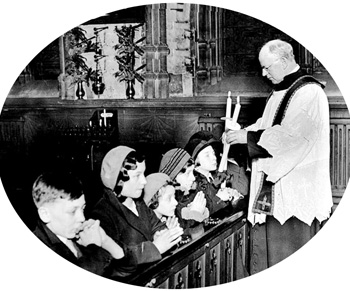
Although the candles are rarely lit today as they were in the past, the priest places two crossed candles upon each parishioner’s throat and prays, “Through the intercession of St. Blaise, Bishop and martyr, may God deliver you from every disease of the throat and from every other illness.”


And there, the birds of heaven brought to him food to eat. And it seemed to him that they and other animals of the forest came to serve him and accompany him, and would not depart from him till he had lifted up his hands and blessed them. And also sick men came to him and anon were cured and healed.
St. Blaise is found by the lord’s knights
The soldiers find the wild beasts
seeking refuge with St. Blaise
Abashed they returned to their lord and told him what had happened. And the lord was amazed to hear this, and anon sent many knights for St. Blaise, and commanded them to bring him and all the Christian men with him.
And that night Jesus Christ appeared to the Saint three times, and said to him: "Arise up and make sacrifice to me. Lo! This day the knights will come to fetch thee at the command of the Prince."
And, indeed, the knights came and said to him: "Come out from this place, for our lord calls for thee."
And St. Blaise answered: "My sons, be welcome, I see now well that God has not forgotten me." So he went with them and began to preach and convert, and did many miracles.
The boy with a fish bone in his throat
St. Blaise saves a boy with a fish bone in his throat
And St. Blaise put his hand upon him and made his prayer to God that this child should be helped, and also all they who demanded benefits of health in his name. And anon the boy was whole and sound.
The widow's pig
Another widow woman there was who was poor but had a swine. One day she came to St. Blaise in great distress because a wolf had borne it away, and she humbly beseeched the Saint that she might have again her pig.
And he began to smile and said: “Good woman be not in distress, for you shall have your swine again.” And he called the wolf up to him, and commanded him to get the pig and drive him back to the widow’s house. Then the wolf went sheepishly away and did what the good Bishop had told him to do, and the widow rejoiced to have her pig restored to her.
But the pagan governor Agricola became disturbed to know St. Blaise would not make sacrifice to his pagan gods. And so he ordered his soldiers to capture the Saint and bring him before him. St. Blaise did not waver and boldly told him that his gods were fiends.
The martyrdom of St. Blaise, c 316
Even after imprisonment, St. Blaise refused to worship the governor's's gods. For punishment he was hung from a tree and the flesh was pulled from his bones with rakes, or iron combs..
Finally, he was beheaded, martyred about the year 316 during the reign of the Emperor Licinius (308–324), on the order of the pagan governor Agricola.
Devotion to St. Blaise flourished in the East by the 6th century and the West by the 9th, in particular for his intervention with ailments of the throat because of the cure of the boy's throat. In the 16th century the custom of the blessing of the throats on his feast day began and continues to our days.
Although the candles are rarely lit today as they were in the past, the priest places two crossed candles upon each parishioner’s throat and prays, “Through the intercession of St. Blaise, Bishop and martyr, may God deliver you from every disease of the throat and from every other illness.”
Throats blessed with lighted candles
on St. Blaise’s Day
Adapted from Jacobus Voragine, The Golden Legend (1275),
trans. by William Caxton, 1843
Posted February 7, 2026
trans. by William Caxton, 1843
Posted February 7, 2026


______________________
______________________
 |
 |
 |