Theology of History
 |
 |
 |
 |
 |
 |
 |
Egalitarianism - X
The Stages Preparing Human Action
Note: Prof. Plinio gave this series of classes in 1957; today in 2026 we see how the egalitarianism in each of the fields he points out has increased and come to dominate almost completely. TIALet us begin our exposition of the Angels by showing their relationship to the seven stages of human action. St. Thomas Aquinas says that action supposes in man, or sets in motion in man, seven faculties, or an action consisting of seven stages.

The frenetic sprit of our days, common on Wall Street, above, work, amusements, etc.
Three stages of thinking
We will first consider the cognitive faculties, and only then the operative faculties of man by which he acts. In this classification of cognitive and operative faculties, we clearly can see the negation of what we could call "Americanism," or also today "Braziianism." It is very common in this frenetic temperament to frantically throw oneself into action without thinking beforehand, without considering what one is going to do or why he is going to do it.
The first step of action, however, is not to act, but to think. One begins an action by thinking and not be acting. The thought process that prepares an action is the predominant element in action. This thought process is composed of these three stages:
1. To know the end
The first cognitive faculty is the faculty by which a person seeks and understands the end he has in mind when he acts. He knows the final end and the intermediate ends that will lead to this end.
This is very sensible. There is nothing more foolish than someone acting without knowing the end he wants to reach. And, the clearer his understanding of the end and the more completely he is absorbed in that end, the better he will perform an action.

The Jesuit emblem found on the institutions of St. Ignatius even today
Application to Saint Ignatius:
St. Ignatius understood quite well the end he had in view:
- First, is the end considered in itself, which is the greater glory of God. Men should desire the greater glory of God, and this was the first end of St. Ignatius, who chose the motto for the Company of Jesus – Ad maiorem Dei gloriam (ADMG).
- Second, is the end as it should be realized and sought in one's particular time.
- Third, is what one should do personally in this work for the greater glory of God.
St. Ignatius had a magnificent knowledge of the glory of God because he knew it in various ways:
A. The glory of God in itself
First, as considered in God; what God's glory is, and how much His glory is worth. And just as he knew what the glory of God is, he knew also what the opposite of the glory of God is, that is, the insult to God. He knew that the glory of God has degrees, just as does the insult to God. He knew the value of God's glory, which is the ultimate end of all things, and the grave injury that exists in a person denying God's glory.
God should be glorified in the temporal as well as religious sphere
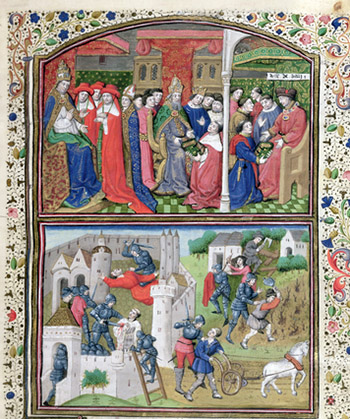
Third, the contemplation of God’s glory in the temporal sphere: How the glory of God is realized in Christendom – in the Christian States, in the intermediate groups such as corporations, fiefdoms, etc., in families and, finally, in individuals. How it is realized in the various manifestations of cultural and social life in all peoples. How each thing in every corner of the earth should give glory to God.
Fourth, finally he knew the glory of God not only in each being considered individually, but in the relationships of these beings among themselves. The harmony of these relationships gives glory to God. So, the movements of beings also should be considered: Beings move in order to achieve, and through this movement give glory to God.
We see, therefore, in these four items, how St. Ignatius had a perfect theoretical doctrinal notion of the end he had in view.
B. State of God's glory in St. Ignatius' time
Moving down the scale, it is evident that St. Ignatius understood how God's glory should be realized in his time, as well as how God was being insulted in his time. That is, he realized how Protestantism and Humanism were stealing souls from God, and how it was necessary to fight to bring souls back to God.
C. The Glory of God in St. Ignatius
Finally, one last point, which is to consider the glory of God as it presented itself not only in his time, but in his own personal case. That is, what he must do to give the glory to God that he should and thus achieve God’s glory in his person. It is clear that a man with a very high, profound, orthodox and holy understanding of all these things could truly be the founder of the Company of Jesus aimed at the glory of God.
2. To choose appropriate means to achieve the end
From this high knowledge of ends in the order of action and the preparation for action, we move to another cognitive faculty, which is knowing the appropriate means to reach that end. This is already something significantly different. Here, he asks what he can do to promote the glory of God. What means should he use to promote the glory of God? With this we move on to the knowledge of the choice of means that lead to this end.
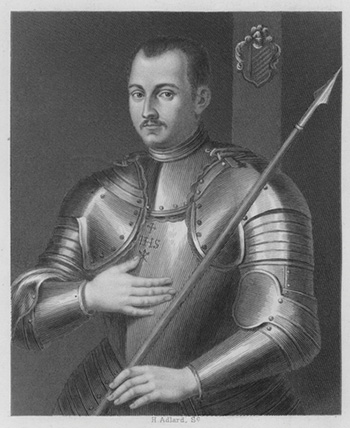
Ignatius studied himself to understand
his attributes & capacities
But, even as he did this, he realized that he alone was insufficient to achieve this end to the extent he wanted, and that he needed an instrument to achieve his ends: This instrument was the Company of Jesus. The solution was a Religious Order with a particular organization, curriculum, works etc. It is the means that he imagined.
But note that up to this point he was not acting, but thinking. Why did he achieve this goal so well? All the perfection in his work existed because he knew well the end. He who knows the end well will also know the means to achieve it.
3. To know how the action will proceed
We move on to the third cognitive faculty. After conceiving a Religious Order, he still had not yet done anything in terms of plans. He needed to know how he would move this Religious Order to achieve its purpose.
It is not enough to have imagined the work; a theory must be constructed of how this work is governed and will be moved to achieve its ends. Because it cannot just stand, it needs to move. And this movement itself needs to be studied.
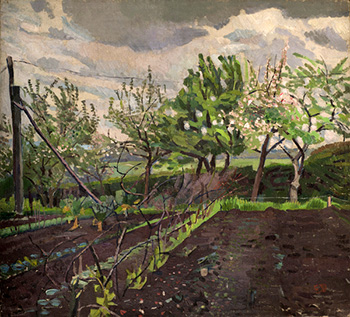
The fertile spirit of a man can produce a work like the earth produces fruit & vegetables
These three stages can be summarized as three states of mind: profound, fertile and practical. The spirit by which a person knows the end, we could say is the profound spirit. The spirit by which a person produces the means, one could say is the fertile spirit .The spirit by which a person moves the means to achieve the end is the practical spirit. It can then be said that with the profound, fertile and practical spirit, a person is truly equipped for action.
In the next article we will look at the four operative stages necessary for the actual realization of the plan.
Continued
Posted March 9, 2026



______________________
______________________
 |
 |
 |