Theology of History
 |
 |
 |
 |
 |
 |
 |
Egalitarianism - XI
What Is Needed for the Action to Succeed
Note: Prof. Plinio gave this series of classes in 1957; today in 2026 we see how the egalitarianism in each of the fields he points out has increased and come to dominate almost completely. TIAIn the last article we studied the cognitive elements necessary to prepare for a human action. Before any action per se begins, a man must study the end he has in sight, consider the instruments or means that are available, and then examine the way to move those means to achieve the end. Only then is he properly equipped in the intelligence to accomplish the action he wants to make.
At this point, we move to the actual implementation of the action, that is, what is required to bring this plan to fruition. There are four operative functions.
1. Leadership ability
The first operative function is the capacity for leadership. After all is said and done, it is necessary that the person who dedicates himself to a work has the capacity to lead. What constitutes this capacity? It is the ability to direct the people and resources in order to achieve a specific objective.
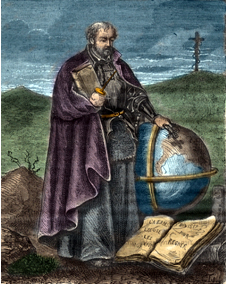
St. Ignatius had capacity to put his plan to conquer the world for Christ in action
One can note here the difference between cognitive and operational faculties. The cognitive faculties are inside the man’s head, in his mind. The capacity to direct, however, consists of acting. It is something intrinsically linked to operation, or the execution of a plan, and, therefore, to leadership.
2. Operational capacity
But there is yet another factor, the operational capacity. It consists of undertaking the conversion itself. There must be a leader who knows how to command, a speaker who inspire others and move the people, etc. Let us take, for example, schools: Strong individuals are needed to found them and make them function. For hospitals, there must be men with the capacity for action. This is a distinct spirit, different from the other. There are persons with the capacity for action but lack the capacity to lead, and vice-versa.
This is highly evident in the military arts. There may be an excellent officer who says, "Go, take that mountain!" But if we were to order him to go and take it, he could not do it. Herein lies a special skill: the ability to execute the task.
3. Capacity to fight
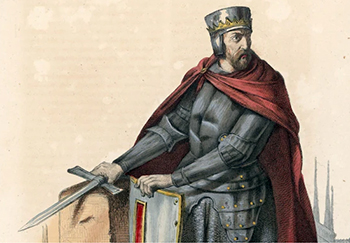
Simon de Montfort led the fight against the Albigensians in the 13th century
Here, for example, you need a man with the capacity to fight, a man who is vigilant and has a strong drive – for to fight without drive is to invite defeat. A certain degree of self-control is also necessary, for fighting with excessive drive is sometimes worse than fighting without any. One must also have dexterity – that is, to know how to strike effectively – as well as perseverance, courage, etc. This applies with regard to both the external and internal enemies of the small group of Jesuits.
4. The ‘specialists’
St. Thomas shows that these capacities relate, generally speaking, to every kind of action. Beyond these general things, it is necessary to have what we might call specialist, individuals who know how to operate effectively in their specific fields.
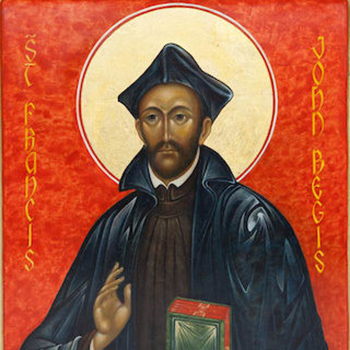
St. Francis John Regis, a ‘specialist’ in preaching – he made whole towns return to the Faith
For instance, these are those who know how to attend to individual needs. Within this group are persons with a special talent for dealing with difficult persons. This sensitivity to the individual – to the concrete reality – is what truly constitutes a form of spiritual charm.
It would be a grave error to assume that these are minor skills; genius can manifest on any of these levels. One can be a genius in some more modest area, yet merely a man of reasonable competence regarding the knowledge of final ends. To say which has a greater value is very difficult. The knowledge of ends, in itself, is a higher thing. But genius is genius, and one must know how to "take off one's hat" to it wherever it is found.
We have here, then, different categories: social groups, subject genres, individual cases. We also have the order of specialists. And if we were to have an organization with spirits fully endowed across these diverse spheres, we would have a truly great organization. Broadly speaking, these constitute families of spirits, as in the stages and modalities of action.
St. Ignatius: A model founder
We can see that St. Ignatius excelled in each of these points. He was a man of great genius and talent. He not only possessed the loftiest ideas, but he also knew how to descend to the concrete and deal with the individual in a very effective manner. He was an excellent spiritual director, a man of strong personal power of persuasion, and one who obviously knew how to avail himself of all manner of legal procedures.
Precisely because he excelled in all these things, St. Ignatius should serve as a model for the founder of a Religious Order, a model for Superior Generals, but even more so, a model for every man of action. For his action, whether consciously or not, was inspired by the great principles upon which in theory all action is based.
In the next article I will show how the seven stages of human action relates to the seven choirs of Angels.
To be continued
Posted April 8, 2026



______________________
______________________
 |
 |
 |