Traditionalist Issues
 |
 |
 |
 |
 |
 |
 |
Dialogue Mass - CLXII
Marc Sangnier’s ‘Submission’
Marc Sangnier put himself forward – and was hailed by his supporters – as an exemplary Catholic whose loyalty to the Pope was second to none. In his letter of submission to Pius X, quoted by Fr. Barbier, Sangnier waxed eloquent about his own “docility and good will” and assured the Pope of the “indissoluble union” that attached him to the Church. He even intimated that the Pope was under a misapprehension about him.
But at no point did Sangnier admit that he himself was at fault. Instead, he blamed everyone else as naysayers and ill-wishers – the Pope for not understanding, conservative Bishops for being “clericalist,” the people for being prejudiced, the right-wing activists for opposing Democracy.
In response to the Pope’s intervention, he declared that the Sillon “would make every effort to avoid with the greatest care all the errors and all the imprecisions that might give the impression that we hold opinions condemned by the Church.”1 [Emphasis added] That was not exactly a frank admission of guilt, but a subterfuge to transfer the blame to others for their lack of understanding. Nevertheless, he closed down the Sillon and disbanded its members.
 His “submission” to Pope Pius X had the effect of disarming critics and winning plaudits from the Hierarchy. But closing the Sillon was only a stratagem to avoid compromising its purpose. Undeterred, Sangnier immediately started planning to regroup his followers, and in 1912 he set up a political organization, La Ligue de la Jeune République (The Young Republican League) to continue the work of the Sillon and promote his own vision of social Catholicism. He inaugurated a new journal, La Démocratie, to replace the original Review,
Le Sillon.
His “submission” to Pope Pius X had the effect of disarming critics and winning plaudits from the Hierarchy. But closing the Sillon was only a stratagem to avoid compromising its purpose. Undeterred, Sangnier immediately started planning to regroup his followers, and in 1912 he set up a political organization, La Ligue de la Jeune République (The Young Republican League) to continue the work of the Sillon and promote his own vision of social Catholicism. He inaugurated a new journal, La Démocratie, to replace the original Review,
Le Sillon.
A high-profile supporter of the Sillon, the founder of the Young Christian Workers, Fr. Joseph Cardijn, was so enthused by the idea of a “democratic” Church that, in his 1921 Welcome Address to Marc Sangnier in Brussels, 2 he made inappropriate reference to “Our Lady of Democracy,” a title he had simply conjured up in defiance of ecclesiastical protocol. The incongruous nature of this title is obvious when we consider that Our Lady, as Mother of Christ the King, is traditionally venerated as Queen of Heaven and Earth.
The link between the Sillon & Vatican II
A key feature of the original Sillon was its claim to a certain autonomy, that is, independence of the Church’s Hierarchy. This was accomplished by the introduction of the “Spirit of Democracy” into the Catholic Faith and into the organizational structures of the Church. The aim was obviously modernist – to replace the monarchical nature of the Church with a form of “collective Christianity” or, in Vatican II speak, Collegiality. This would mean that the role of the Hierarchy would be reduced to approving the collective aspirations of the people, thus rendering the exercise of episcopal authority in the spiritual domain nugatory and ineffective.
Then there was the Sillon’s denigration of Leo XIII’s Aeterni Patris (a document, incidentally, which was sent down the memory hole at Vatican II), followed by the abandonment of Scholastic Theology, leading to religious pluralism. This was the opening gambit for Religious Liberty.
 The Sillon also claimed to be non-confessional, that is, willing to co-operate with members of other religions or atheists – the latter would logically have to include communists – to build the “Future City” on Democracy alone. Thus, in order to achieve unity among the disparate participants in the task of social regeneration, a compromise would have to be made, based on the values of the “collective” to the exclusion of the integral Catholic Faith. This was Ecumenism in the making.
The impression was given that all of humanity could achieve unity in a religion more universal than the Catholic Church. From then on, it would be impossible to distinguish God’s Party from the People’s Party, Catholic moral principles from general benevolence, and the One Ark of Salvation from a Babel of all religions. One indispensable ingredient was missing in Sangnier’s proposed regeneration of society – clarity in the Faith, which provides the very foundation that families and nations need in an increasingly relativistic world.
All the evidence shows that the Sillon’s faith was not directed to the patrimony of Catholic Tradition as the basis for Western Civilization. It, in fact, despised the duty of patriotism to one’s native land, preferring to uphold international laws and institutions inspired by Marxism which would flood the Church with multiculturalism, moral relativism and anti-Western values.
The Sillon, therefore, born of rebellion and subversion, can be seen as the forerunner of Vatican II’s doctrines of Religious Liberty, Collegiality and Ecumenism which have points of correspondence with the tripartite principles of the French Revolution.
Continued

But at no point did Sangnier admit that he himself was at fault. Instead, he blamed everyone else as naysayers and ill-wishers – the Pope for not understanding, conservative Bishops for being “clericalist,” the people for being prejudiced, the right-wing activists for opposing Democracy.
In response to the Pope’s intervention, he declared that the Sillon “would make every effort to avoid with the greatest care all the errors and all the imprecisions that might give the impression that we hold opinions condemned by the Church.”1 [Emphasis added] That was not exactly a frank admission of guilt, but a subterfuge to transfer the blame to others for their lack of understanding. Nevertheless, he closed down the Sillon and disbanded its members.
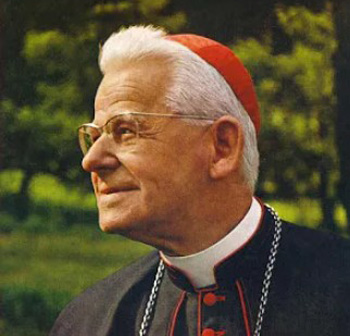
Fr. Joseph Cardijn, founder of the Young Christian Workers, was made cardinal by Paul VI in 1965
A high-profile supporter of the Sillon, the founder of the Young Christian Workers, Fr. Joseph Cardijn, was so enthused by the idea of a “democratic” Church that, in his 1921 Welcome Address to Marc Sangnier in Brussels, 2 he made inappropriate reference to “Our Lady of Democracy,” a title he had simply conjured up in defiance of ecclesiastical protocol. The incongruous nature of this title is obvious when we consider that Our Lady, as Mother of Christ the King, is traditionally venerated as Queen of Heaven and Earth.
The link between the Sillon & Vatican II
A key feature of the original Sillon was its claim to a certain autonomy, that is, independence of the Church’s Hierarchy. This was accomplished by the introduction of the “Spirit of Democracy” into the Catholic Faith and into the organizational structures of the Church. The aim was obviously modernist – to replace the monarchical nature of the Church with a form of “collective Christianity” or, in Vatican II speak, Collegiality. This would mean that the role of the Hierarchy would be reduced to approving the collective aspirations of the people, thus rendering the exercise of episcopal authority in the spiritual domain nugatory and ineffective.
Then there was the Sillon’s denigration of Leo XIII’s Aeterni Patris (a document, incidentally, which was sent down the memory hole at Vatican II), followed by the abandonment of Scholastic Theology, leading to religious pluralism. This was the opening gambit for Religious Liberty.
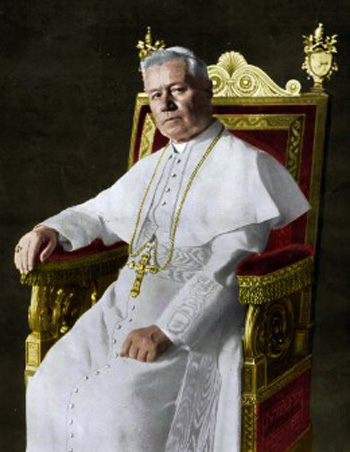
Mark Sangnier closed the Sillon after St. Pius X’s condemnation, but opened another similar group
The impression was given that all of humanity could achieve unity in a religion more universal than the Catholic Church. From then on, it would be impossible to distinguish God’s Party from the People’s Party, Catholic moral principles from general benevolence, and the One Ark of Salvation from a Babel of all religions. One indispensable ingredient was missing in Sangnier’s proposed regeneration of society – clarity in the Faith, which provides the very foundation that families and nations need in an increasingly relativistic world.
All the evidence shows that the Sillon’s faith was not directed to the patrimony of Catholic Tradition as the basis for Western Civilization. It, in fact, despised the duty of patriotism to one’s native land, preferring to uphold international laws and institutions inspired by Marxism which would flood the Church with multiculturalism, moral relativism and anti-Western values.
The Sillon, therefore, born of rebellion and subversion, can be seen as the forerunner of Vatican II’s doctrines of Religious Liberty, Collegiality and Ecumenism which have points of correspondence with the tripartite principles of the French Revolution.
Continued
- E. Barbier, Histoire du catholicisme libéral et du catholicisme social en France: du Concile du Vatican à l’avènement de S.S. Benoît XV: 1870–1914, 5 vols., vol. 5, Bordeaux: G. Delmas, 1924, p. 179.
- Joseph Cardijn, ‘Welcome Speech to Marc Sangnier, Founder of the Sillon Movement,’ February 5, 1921, Fonds Cardijn, General Archives of Belgium, Brussels, published on the Cardijn Digital Archive. According to their website, the text of the letter exists only in handwritten form.
Posted June 15, 2026


______________________
______________________
 Volume I |
 Volume II |
 Volume III |
 Volume IV |
 Volume V |
 Volume VI |
 Volume VII |
 Volume VIII |
 Volume IX |
 Volume X |
 Volume XI |
 Special Edition |